Motorcycle Motor Oil: Guide for Peak Engine Performance
If you want your motorcycle to run smoothly and last longer, choosing the right motor oil is one of the most important decisions you’ll make. Your bike’s engine works hard every time you ride, and the right motor oil keeps it cool, clean, and protected.
But with so many options out there, how do you know which one is best for your ride? Keep reading, because understanding motorcycle motor oil can save you money, boost performance, and prevent costly repairs down the road. This guide will help you make smart choices that keep your bike—and your rides—running at their best.
Choosing the right type of motor oil is crucial for a motorcycle’s performance and engine life. Different oils suit different riding styles, weather, and engine types. Understanding the types of motorcycle motor oil helps in making the best choice. There are three main types: mineral oil, synthetic oil, and semi-synthetic oil. Each has unique features, benefits, and drawbacks. This guide explains these types clearly and simply.
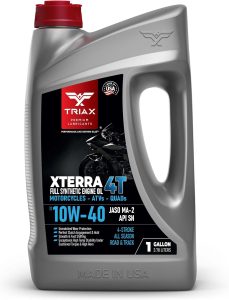
TRIAX XTerra 4T 10W-40 Full Synthetic 4 Stroke Engine Oil | For Motorcycles, ATVs, Quads & Snowmobiles | Exceeds JASO MA2 & API SL/SM/SN | True All Season | Race Ready (1 Gallon)
Mineral oil is the most basic type of motorcycle motor oil. It is made by refining crude oil. This process removes impurities, but the oil still contains natural compounds. Mineral oil is thicker and less refined than synthetic oils. It works well in older motorcycles or simple engines.
Advantages of Mineral Oil:
Usually cheaper than synthetic oils
Good for low-speed and less powerful engines
Easy to find in most stores
Disadvantages:
Breaks down faster at high temperatures
Needs more frequent oil changes
Less effective in extreme weather conditions
Feature
Mineral Oil
Source
Refined crude oil
Cost
Low
Performance at high temp
Poor
Frequency of oil changes
More often
Synthetic Oil
Synthetic oil is made using chemical processes. This oil is designed to be pure and stable. It offers better protection and lasts longer than mineral oil. Synthetic oils work well in modern and high-performance motorcycles.
Benefits of Synthetic Oil:
Excellent engine protection under high heat
Improves fuel efficiency
Longer intervals between oil changes
Better flow at cold temperatures
Points to consider:
Usually more expensive than mineral oil
May not be necessary for older engines
Requires careful selection to match engine type
Feature
Synthetic Oil
Source
Chemically engineered
Cost
High
Performance at high temp
Excellent
Frequency of oil changes
Less often
Semi-synthetic Oil
Semi-synthetic oil blends mineral and synthetic oils. This mix balances cost and performance. It offers better protection than mineral oil and costs less than full synthetic oil. This type suits many riders who want good performance without high expense.
Advantages of Semi-Synthetic Oil:
Improved engine protection compared to mineral oil
Better resistance to heat and oxidation
More affordable than fully synthetic oils
Suitable for a wide range of motorcycles
Limitations:
Not as long-lasting as full synthetic oils
May require more frequent changes than synthetic oil
Performance can vary by brand and blend ratio
Feature
Semi-Synthetic Oil
Source
Blend of mineral and synthetic
Cost
Moderate
Performance at high temp
Good
Frequency of oil changes
Moderate
Viscosity And Its Importance
Viscosity is a key factor in motorcycle motor oil. It measures how thick or thin the oil is at certain temperatures. The right viscosity keeps your engine parts moving smoothly and protects them from wear. Too thick oil can make the engine work harder. Too thin oil may not protect enough. Understanding viscosity helps you pick oil that fits your bike’s needs and riding style.
Understanding Viscosity Grades
Viscosity grades are numbers and letters that tell you how oil flows at different temperatures. The most common system is the SAE (Society of Automotive Engineers) grading. You will see labels like 10W-40 or 20W-50. These numbers show how the oil behaves in cold and hot conditions.
First number (before W): Indicates oil thickness in cold temperatures (Winter rating).
W: Stands for Winter.
Second number: Shows oil thickness at engine operating temperature.
For example, 10W-40 means the oil acts like a 10-weight oil in cold weather and a 40-weight oil when hot. Lower first numbers mean better flow in cold. Higher second numbers mean thicker oil when the engine is hot.
Viscosity Grade
Cold Temperature Behavior
Hot Temperature Behavior
5W-30
Flows easily in cold starts
Medium thickness at high heat
10W-40
Good cold flow for moderate climates
Thicker oil for hot engines
20W-50
Thicker in cold, harder to flow
Very thick, good for high temperatures
Viscosity affects oil pressure, engine wear, and fuel efficiency. The wrong viscosity can lead to poor engine performance or damage. Always check your motorcycle’s manual for recommended viscosity grades.
Choosing The Right Viscosity For Your Bike
Choosing the correct viscosity depends on your bike’s engine, climate, and riding style. Different engines need different oil thicknesses to work well. Climate affects how oil flows when you start the engine. Riding style changes the oil’s workload.
Follow these steps to choose the best viscosity:
Check the owner’s manual: It lists the recommended viscosity grades.
Consider your climate: Use lower “W” numbers for cold places to ensure easy starts.
Match your riding style: For high-speed or heavy-load riding, use thicker oil to protect the engine.
Use multi-grade oils: These oils work well in different temperatures and are great for variable weather.
Here is a simple guide:
Climate
Recommended Viscosity
Notes
Cold (below 32°F / 0°C)
5W-30, 5W-40
Easier starting, better flow
Moderate (32°F to 86°F / 0°C to 30°C)
10W-30, 10W-40
Good balance for daily rides
Hot (above 86°F / 30°C)
20W-50
Thicker oil protects under heat
Choosing the right viscosity extends engine life. It keeps parts lubricated and reduces wear. It also improves fuel efficiency and smooths engine starts. Always replace oil on time and use the correct grade for best results.
Additives In Motorcycle Oil
Motorcycle motor oil does more than just lubricate engine parts. It contains special additives that protect your bike’s engine and improve performance. These additives keep the engine clean, reduce wear, and help the oil work better under different conditions. Understanding these additives helps you choose the right oil for your motorcycle and keep it running smoothly for longer.
Detergents And Dispersants
Detergents and dispersants are key additives that help keep your engine clean. They prevent dirt, sludge, and deposits from building up inside the engine. These additives work by breaking down harmful particles and keeping them suspended in the oil so they can be removed during oil changes.
Detergents:
Neutralize acids formed during combustion
Clean engine parts by removing deposits
Prevent corrosion and rust
Dispersants:
Keep sludge and varnish particles suspended
Stop particles from sticking to engine surfaces
Maintain oil flow and engine efficiency
Additive Type
Main Function
Benefit to Motorcycle Engines
Detergents
Neutralize acids, clean deposits
Protect the engine from corrosion and sludge
Dispersants
Keep particles suspended in oil
Maintain oil flow and prevent blockages
By using oil with strong detergents and dispersants, your motorcycle engine stays cleaner and lasts longer.
Anti-wear Agents
Anti-wear agents protect moving parts inside the engine from damage. Motorcycle engines have many metal parts that rub against each other. Without protection, this rubbing causes wear and tear, reducing engine life.
These agents form a thin protective layer on metal surfaces. This layer reduces direct metal-to-metal contact and lowers friction. Common anti-wear additives include zinc dialkyldithiophosphate (ZDDP).
Prevent metal surface damage during start-up and high load
Extend engine life by reducing wear
Help maintain engine efficiency and smooth operation
Here’s how anti-wear agents work:
Oil flows over engine parts
Additives react with metal surfaces under heat and pressure
A protective film forms, reducing wear
Choosing oil with strong anti-wear agents is vital for motorcycles, especially those with high-performance engines. It ensures long-term protection and fewer costly repairs.
Friction Modifiers
Friction modifiers improve how smoothly engine parts move against each other. They reduce friction beyond what the base oil can do alone. Less friction means better fuel efficiency and less heat generation.
Friction modifiers work by creating a slippery layer between moving parts. This layer helps the engine run quietly and smoothly. Some common friction modifiers include molybdenum compounds and certain organic materials.
Improve fuel economy by reducing energy loss
Lower engine temperature by cutting friction heat
Enhance engine responsiveness and smoothness
Benefit
Effect on Motorcycle Engine
Reduced friction
Smoother engine operation and less wear
Lower heat
Improved engine durability
Better fuel efficiency
Save on fuel costs
Friction modifiers are especially useful for motorcycles that need quick throttle response and smooth power delivery. They help the engine perform better and last longer.
Oil Change Intervals
Motorcycle motor oil plays a crucial role in keeping the engine running smoothly. Changing the oil at the right time helps protect the engine from wear and damage. Oil change intervals tell riders how often to replace the oil to maintain engine health. These intervals vary based on many factors. Knowing when to change the oil keeps your motorcycle reliable and extends its life.
Factors Affecting Oil Life
Several factors affect how long motorcycle motor oil lasts. Understanding these helps set the right oil change schedule. Some oils break down faster under certain conditions.
Riding Style: Aggressive riding or high speeds cause the engine to heat more. This shortens oil life.
Engine Type: High-performance and older engines may need oil changes more often.
Oil Type: Synthetic oils usually last longer than conventional oils.
Climate: Hot or cold weather affects oil viscosity and performance.
Frequency of Short Trips: Short rides do not warm the engine fully, causing oil to degrade faster.
Use this table as a general guide for oil change intervals based on oil type and riding conditions:
Oil Type
Normal Riding (miles)
Severe Riding (miles)
Conventional
2,000 – 3,000
1,000 – 1,500
Semi-Synthetic
3,000 – 4,000
1,500 – 2,000
Synthetic
4,000 – 6,000
2,000 – 3,000
Check the motorcycle’s manual for specific recommendations. Adjust the oil change interval if riding conditions are tough or the engine shows unusual wear.
Signs It’s Time To Change Oil
Recognizing when the oil needs changing prevents engine damage. Watch for these common signs:
Dark or Dirty Oil: Fresh oil is amber and clear. Dark, thick oil means dirt and contaminants build up.
Engine Noise: Loud or unusual engine sounds can mean poor lubrication.
Oil Level Drops Quickly: Frequent need to add oil suggests leaks or burning oil.
Excessive Engine Heat: Overheating might happen if the oil loses its cooling properties.
Oil Change Light or Indicator: Many motorcycles have sensors that alert when oil needs changing.
Perform a simple oil check with these steps:
Park the motorcycle on level ground and cool the engine.
Remove the dipstick or check the sight glass.
Look for oil color and level.
Smell the oil for a burnt odor.
Changing oil on time keeps the engine clean and running well. Ignoring these signs can lead to costly repairs.
Impact Of Oil On Engine Performance
Motorcycle motor oil plays a crucial role in the health and performance of an engine. It is not just a simple fluid but a key factor that affects how smoothly and efficiently the engine runs. The impact of oil on engine performance cannot be overstated. Good quality oil keeps all engine parts working together without friction and heat damage. It also helps maintain power and fuel efficiency. Understanding this impact helps riders choose the right oil for their motorcycles and extend engine life.
Lubrication And Cooling
Motorcycle engines have many moving parts that rub against each other. Motor oil creates a thin film between these parts. This film reduces friction and stops metal surfaces from grinding together. Without proper lubrication, engine parts can wear out quickly and cause damage.
Besides lubrication, oil helps in cooling. It carries heat away from the engine parts and spreads it evenly. This prevents overheating, which can cause engine failure. The oil’s ability to cool depends on its viscosity and quality.
Lubrication: Reduces friction and prevents metal contact.
Cooling: Absorbs and dissipates heat to protect the engine.
Cleaning: Oil removes dirt and tiny metal particles.
Function
Importance
Effect on Engine
Lubrication
Prevents metal parts from wearing out
Smooth engine operation and longer life
Cooling
Removes excess heat from the engine
Prevents engine overheating and damage
Cleaning
Collects dirt and debris
Maintains engine cleanliness and efficiency
Choosing oil with the right viscosity ensures proper flow and protection. Thinner oils flow easily but may not protect at high temperatures. Thicker oils protect well but can reduce fuel efficiency. Balanced oil keeps the engine cool and well-lubricated under all conditions.
Reducing Engine Wear
Engine wear happens when parts rub directly without a protective layer. Motorcycle motor oil forms a shield on engine surfaces. This shield stops metal parts from touching and wearing out. It also reduces the chance of engine breakdowns.
Oil contains additives that help reduce wear. These additives form a protective layer even under extreme pressure and temperature. They also prevent corrosion and rust inside the engine.
Wear protection: Oil film stops metal-to-metal contact.
Additives: Reduce corrosion and deposits.
Cleaner engine: Oil traps dirt and prevents damage.
Regular oil changes keep the engine safe from wear. Old oil loses its ability to protect and clean. It becomes thick and dirty, which can cause engine parts to wear faster.
Cause of Wear
Oil’s Role
Benefit
Friction between parts
Forms a protective oil film
Reduces metal wear and tear
Corrosion from moisture
Additives prevent rust
Protects engine components
Dirt and debris buildup
Oil traps contaminants
Keeps engine clean and efficient
Proper maintenance and choosing high-quality motorcycle oil help reduce engine wear. This keeps the engine running longer and saves money on repairs.
Environmental Considerations
Motorcycle motor oil plays a vital role in engine health and performance. Its use and disposal have direct effects on the environment. Understanding these environmental considerations helps reduce harm and supports cleaner riding. Responsible oil handling prevents pollution and protects natural resources. Choosing the right oil and disposing of it properly can make a big difference.
Disposal Of Used Oil
Used motorcycle oil contains harmful chemicals and pollutants. Throwing it away carelessly can pollute soil and water. It can harm plants, animals, and even humans. Proper disposal is essential for environmental safety.
Follow these steps to dispose of used oil safely:
Drain oil carefully into a clean, leak-proof container.
Do not mix oil with other fluids like gasoline or antifreeze.
Take used oil to authorized recycling centers or service shops.
Never pour oil on the ground, in drains, or in trash bins.
Many communities offer free oil recycling programs. Use local resources to keep the environment safe.
Do’s
Don’ts
Use sealed containers for storage
Discard oil in storm drains
Recycle at authorized centers
Mix the oil with other waste fluids
Label containers clearly
Burn used oil
Proper disposal reduces toxic waste and protects water supplies. It also supports oil recycling and reuse. This helps conserve natural resources and lowers environmental impact.
Eco-friendly Oil Options
Choosing eco-friendly motorcycle oil helps reduce pollution and waste. These oils are made with less harmful ingredients and break down faster in nature.
Types of eco-friendly oils include:
Biodegradable oils: Made from natural plant oils, they decompose easily.
Synthetic oils: Engineered for better performance and longer life, reducing waste.
Switching to eco-friendly oil supports cleaner air and water. It also helps maintain your motorcycle’s engine health with fewer oil changes.
Common Myths About Motorcycle Oil
Motorcycle motor oil plays a vital role in keeping your bike running smoothly. Many riders believe things about motorcycle oil that are not true. These myths can cause confusion and even damage. Knowing the facts helps you choose and use oil wisely.
Myth 1: All Motorcycle Oils Are The Same
Not true. Motorcycle oils differ in ingredients and quality. Some oils are made for specific engines or riding styles. Using the wrong oil can harm engine parts or reduce performance.
Myth 2: Thicker Oil Protects Better
Thicker oil does not always mean better protection. Oil must flow well to reach engine parts quickly. Too thick oil may cause poor circulation and increase wear.
Myth 3: Synthetic Oil Is Not Necessary For Motorcycles
Synthetic oil offers better heat resistance and lasts longer than conventional oil. It keeps the engine cleaner and reduces wear under tough conditions.
Myth 4: You Don’t Need To Change Oil Often
Old oil loses its ability to protect the engine. Dirt and metal particles build up, causing damage. Regular oil changes keep the engine healthy.
Myth 5: Motorcycle Oil And Car Oil Are Interchangeable
Car oil and motorcycle oil have different formulas. Motorcycle oil handles higher engine temperatures and clutch friction. Using car oil can cause clutch slipping or engine issues.
Myth
Truth
All motorcycle oils are the same
Oils vary by type and purpose; choose the right one for your bike
Thicker oil protects better
Oil must flow easily; too thick oil can harm the engine
Synthetic oil is unnecessary
Synthetic oil offers better protection and lasts longer
Oil changes are not needed often
Regular changes prevent engine damage and maintain performance
Car oil can be used in motorcycles
Motorcycle oil suits the engine and clutch needs better than car oil
Frequently Asked Questions
What Type Of Motor Oil Is Best For Motorcycles?
Motorcycle oils are made for engine needs and bike parts. Use oil labeled for motorcycles.
How Often Should I Change My Motorcycle Motor Oil?
Change oil every 3,000 to 5,000 miles or as your manual says.
Can I Use Car Motor Oil In My Motorcycle?
Car oil lacks additives for motorcycles. It’s safer to use motorcycle-specific oil.
What Does Motorcycle Oil Viscosity Mean?
Viscosity shows oil thickness. Lower numbers flow better in cold; higher pressures in heat.
Why Is Synthetic Oil Good For Motorcycles?
Synthetic oil lasts longer and protects better in hot and cold conditions.
Conclusion
Choosing the right motorcycle motor oil protects your engine well. It keeps the bike running smoothly and cool. Regular oil changes help avoid costly repairs later. Good oil improves fuel use and extends engine life. Always check your bike’s manual for the best oil type.
Clean oil means better rides and fewer troubles. Remember, simple care keeps your motorcycle happy and strong. Stay safe and enjoy every ride with proper motor oil.